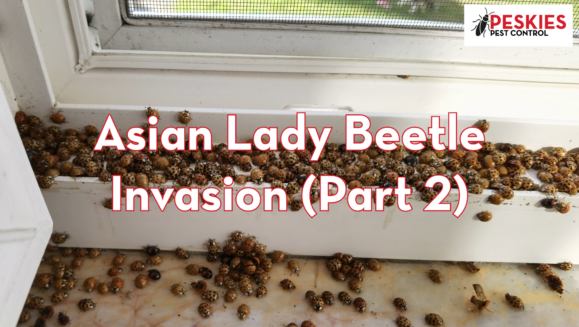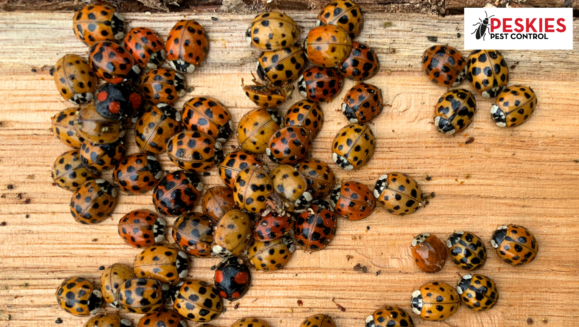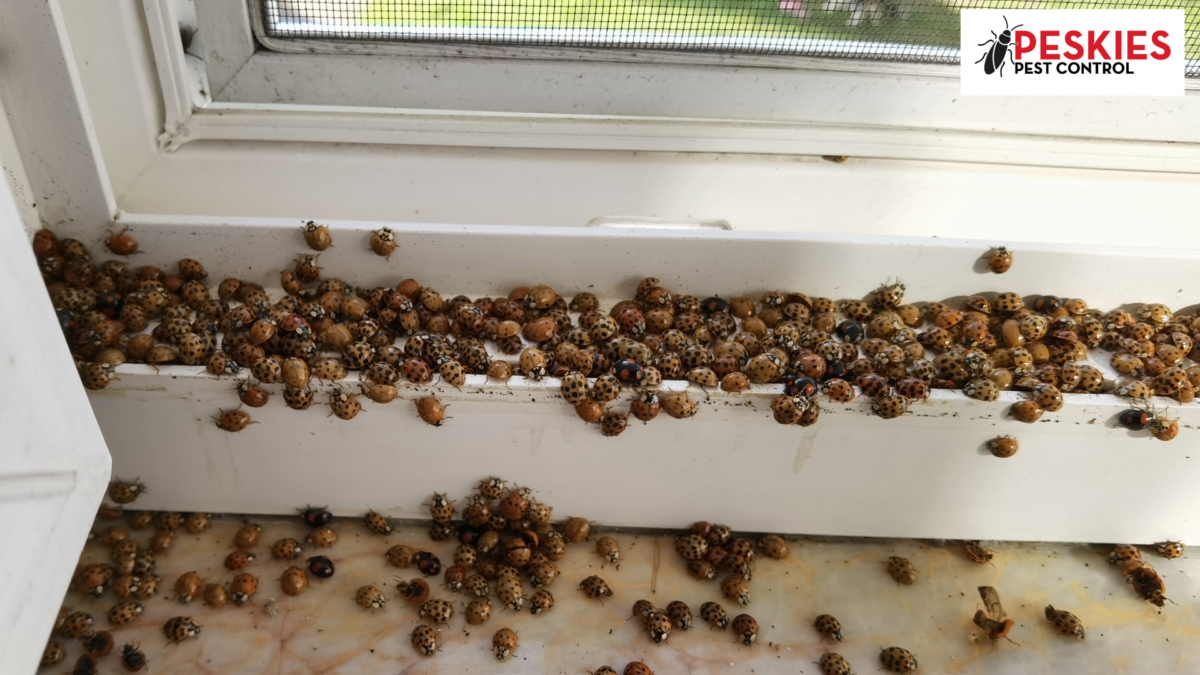
In Part 2 of our special case study, the Peskies Pest Control Podcast welcomes listener Laura from Georgia to discuss her home’s overwhelming Asian Lady Beetle invasion. After our initial photo review from part 1, we head inside to identify the specific interior “hotspots” that allow these pests to establish a foothold.
Interior Design Vulnerabilities
Living with thousands of beetles is a seasonal nightmare. During our discussion with Laura, we identified several architectural features that contribute to the problem:
The Light Trap Effect: Beetles are strongly attracted to interior light sources. At night, they swarmed Laura’s windows and double doors, attempting to reach the light.
Tongue-and-Groove Ceilings: These beautiful wood finishes often harbor small gaps and crevices. These provide direct passage for beetles to move from the roofline into the living space.
Double Doors and Window Seals: Even small gaps in door frames or slightly shortened window seals can act as a welcome mat for persistent pests.
Professional Treatment Strategies
Travis and Michael break down why standard “spraying” isn’t enough for an infestation of this scale. Instead, we advocate for Integrated Pest Management (IPM), focusing on:
Exclusion First: Identifying and sealing entry points before pests arrive.
Insecticidal Dusts: Applying fine, long-lasting powders into void spaces—such as attics and wall cavities—where beetles congregate.
Strategic Timing: The most critical step is an exterior barrier treatment in late September or early October, before the beetles begin their migration indoors.
Don’t Settle for "Untreatable"
Many local companies told Laura there was nothing that could be done. At Peskies, we aim for a 95% reduction in flying insects to make your home livable again. As Travis often says, “an ounce of prevention is worth a pound of cure”.