Podcast: Play in new window | Download
Subscribe: RSS
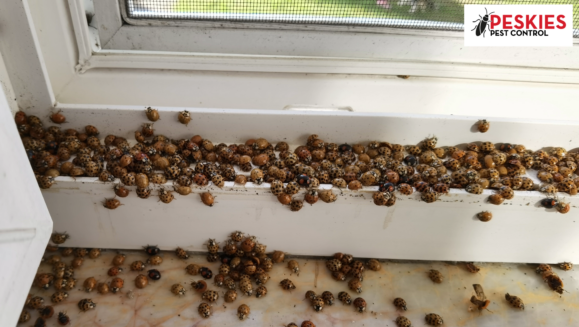
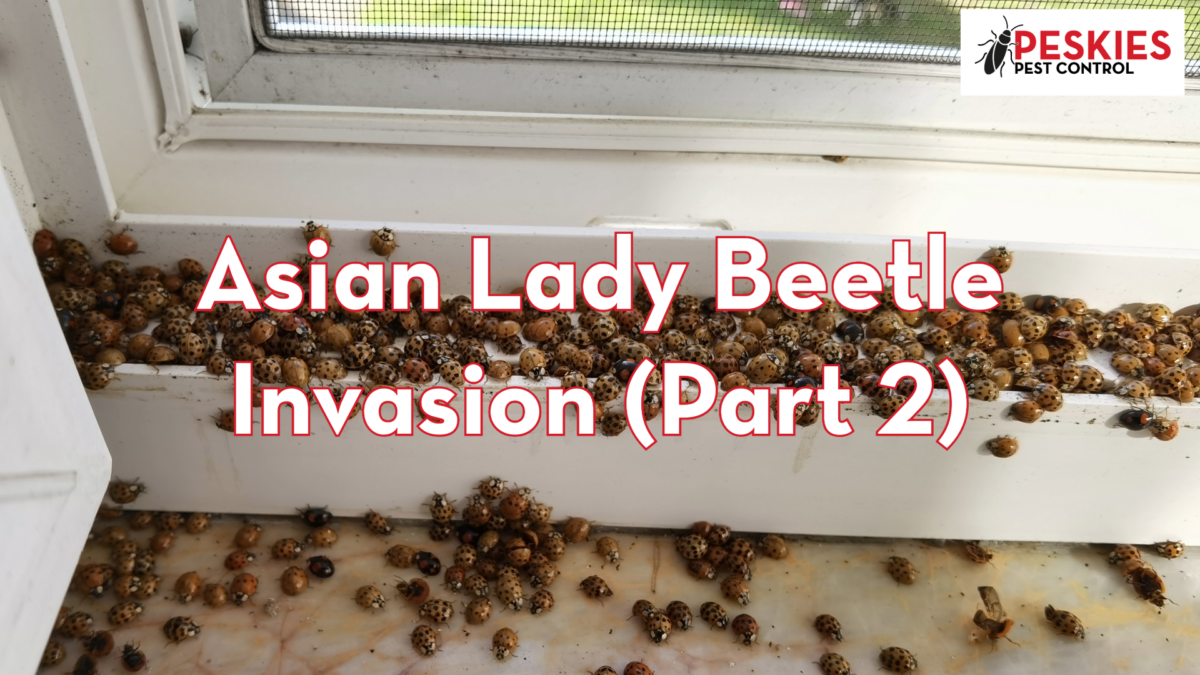
In this episode of the Peskies Pest Control Podcast, hosts Michael Wienecke and Travis McGowin consult with a homeowner named Laura regarding a severe, recurring infestation of Asian Lady Beetles in her Georgia home. We identify these insects as “occasional invaders” that swarm southern-facing structures in the fall to overwinter, often attracted to the same locations year after year by lingering pheromones. To combat the issue, we recommend an “IPM” (Integrated Pest Management) approach that prioritizes structural exclusion—sealing cracks and poor door seals—combined with the strategic use of insecticidal dusts in wall voids and fast-acting liquid treatments on high-activity exterior surfaces. While many local companies suggested only vacuuming the pests, the Peskies team emphasizes that a proactive professional protocol can achieve a 90% to 95% reduction in the beetle population.
Podcast Transcript:
Michael Wienecke: All right, so here today on the Peskies Pest Control Podcast, we have got a guest—Laura from Georgia. She put a form out on our online fill-out form and said her issue, what she was having an issue with. No one in Georgia could take care of it. Saw a YouTube video that Travis and I had made, and so she came, she wants to come on the podcast and just talk about this issue, which is Asian Lady Beetles. So here she is.
Travis McGowin: All right. Welcome, Laura.
Laura K: Thank you! Nice to be here.
Travis McGowin: So Laura, we understand that you’ve got a pretty extreme—I was about to say German cockroaches! We were talking about those earlier—but Asian Lady Beetles. I mean, who knew? Now is this your first run-in with them that you’ve ever really had?
Laura K: Yes. I’ve never had them—you think they’re ladybugs until you have hundreds or thousands of them and they bite, and you know that’s not a ladybug.
Michael Wienecke: Did you have any reaction to the bite?
Laura K: No, just hurts. And they’re not aggressive; they just bite if they get stuck, like under a sleeve or something, but it’s still not good.
Travis McGowin: Now have you been in Georgia your entire life or…?
Laura K: No, I grew up in Virginia… in rural Virginia, so I’m used to bugs and rural areas. And then lived in New Jersey for 10 years, and then we got cold and it was expensive, and we moved to Georgia in 2004. So we’ve been in Georgia since then.
Travis McGowin: That’s pretty impressive though that you’ve lived several different places and still up to this point haven’t really had any kind of run-ins with these things. And it feels like—Michael, see if you agree—but I do feel like now over the last probably four or five years, they’ve actually seemed to be getting worse. That’s just from my take on how many I’ve treated and seen. Would you agree with that?
Michael Wienecke: 100%. Me and my wife went to Georgia, I do not know exactly where, but it was very similar to your pictures of your home—beautiful home by the way, up in the mountains and all that—but we were bombarded by them. My wife, obviously, it’s not something that… they controlled them a lot better than what was outside than what was inside the condo/cabin where we were at. So I think they were doing something. But yes, like Travis said, we’ve had such hot winters. It’s just been extremely hot winters and we normally see a much larger pest infestation or we start seeing a lot more aggregation of pests inside homes in the summer.
Travis McGowin: So these Asian Lady Beetles, they fall under a category in our world of trying to overwinter in a warm place. They’re one of a couple—you’ve got Asian Lady Beetles, you’ve got the Brown Marmorated Stink Bugs…
Laura K: Stink bugs are all there too, yeah.
Travis McGowin: Right, absolutely. So they come into September, October, they start to look for a place to overwinter and ride out the potentially colder weather, which in Alabama we’ve had like three days of cold weather and the rest has been miserably warm or humid. And I’m sure North Georgia might be better, but Georgia itself is probably not too far off base of what we’ve been seeing.
Laura K: No, it’s been a mild winter, yeah.
Travis McGowin: Yeah, they creep in and they just try to take over. They’re just looking for a place to hang out and they come in droves.
Laura K: They do. They fly, yeah.
Michael Wienecke: Well, they’re called occasional invaders for this reason, that they come in right around that time and then they drop off at a certain time, and then the next year they come right back.
Travis McGowin: Right, so, but from what we’ll discuss and from what you’ve experienced, I feel like come next season for these pests, you’ll probably be a lot more well-equipped to deal with them, especially having some understanding about what it is you’re dealing with.
Laura K: I hope so. I’ve got… that’s why I wanted to talk to you guys about it, but also just to come up with a plan for the next six months to start the prevention because I know they’ll come back. I think they’re trying to get out of the house from what I’ve read. And so they get trapped inside now and they die everywhere. And so they are, I guess, trying to get out, but then they’re going to come back in the fall and swarm again. And they swarmed like… you had to walk like you’re swatting them to get up to the house. It was terrible. And I don’t think the previous homeowners did anything. I think they were very much more laid back than we are.
Travis McGowin: Well, and as with most any pest, on the very basic level, the first thing we always like to take a look at is how are they getting in and what can you do about that? Before any type of chemical application, before any type of pesticide or what have you. I don’t know if you’re familiar with the term “Integrated Pest Management” or IPM, but in your research you may have seen it or heard it. So IPM is really, really big on cutting the access points off for whatever it is you’re having a problem with even before using anything to basically harm them or kill them or whatever it is. So, judging by what we saw from some of the pictures that you sent us for your house there… you’ve probably got a decent amount of access points around.
Laura K: Oh yeah, for sure, yeah. And we’ve tried to seal up windows and doors as best we can, but I think our next step is going to be to hire a painter to just come and caulk the entire house. Like everywhere—outside, inside, if you guys think that would help. But just all those little cracks and crevices because it’s an older home and it’s got a lot in it.
Michael Wienecke: Well, and that’s what I wanted to pull up the pictures and talk about too, because there are a few areas, and I’m really hoping because I’ve bet a lot on this in myself, but where these little guys are hanging out mostly in your house. So, right-hand side right there on the deck ledge, is that where you’re getting most of the activity?
Laura K: Yes, around those doors and that window on the right. Both of the two windows on the right side, but really the one on the right side mostly—right is… they’re everywhere. That corner. That lighter colored wood right there.
Michael Wienecke: Yes, that shingles, uh-huh.
Travis McGowin: Now which direction—can you advise us which direction that part of the house faces?
Laura K: That is… it faces south.
Travis McGowin: Okay, so being that it’s a southern-facing direction, of course sun rises in the east and then sets towards the west, it’s probably, I would dare say, probably receives the most amount of sunlight more so than the rest of the house. Obviously more so than the opposite side.
Laura K: Yes, it’s been a mild winter.
Michael Wienecke: So tell me what your other pest control companies have done to try to get rid of this problem for you as far as treatment?
Laura K: They have come out and just sprayed. They sprayed the eaves, the windows, around the doors… they were just out last week.
Travis McGowin: So when did they start doing that?
Laura K: We’ve only owned the home since November. So they came shortly after when we moved in with the ladybugs and were needing help. So they came probably late November and sprayed, and then I called them and said come back and they did and it didn’t, you know…
Travis McGowin: So that—that’s the kicker right there, and I’m glad you—I’m not glad you’re dealing with this, but I’m glad you said November because it probably hit the nail on the head of what I was thinking in my mind, which is: so they start to migrate in in that September-October range. So by the point that you guys purchased the house, they were already there. Now I’m not going to say you didn’t end up with more like you said, they’ve swarmed and you’re swatting at them and all that, but if you don’t catch it from a chemical application standpoint on the exterior of the house before they get there, then they’re already inside.
Michael Wienecke: It is much more difficult to deal with them once they’re already, like he said, established. Because they’re going to put off that pheromone and they’re going to just start kind of coming in there in droves.
Travis McGowin: Right. So this is kind of the point in question that we’re talking about, that second floor. How are the door seals around that bottom?
Laura K: They’re really bad. The doors need to be replaced, we just can’t afford to do it yet. But both doors are in pretty rough shape. I mean, you can see daylight through one of them—like through the crack in the middle.
Travis McGowin: And they probably get baked by the sun a lot. The black trim attracts them, I think, because it’s warm through there.
Michael Wienecke: My other one was the inside—it’s beautiful, but you don’t have an attic space. So I would imagine that there’s some pretty good cracks and crevices between the tongue and groove where they may be getting in through that.
Laura K: They are definitely. And in this corner where the fan to the right is… yeah, that corner, there’s tons of them. All over there, all through there. And we tried caulking on our own some of those cracks and crevices and it just got to be too much. So… yeah, I think it needs to be done anyway, it’ll look better.
Travis McGowin: But let me ask you this. So, I know you had—let’s see if I can find the picture that’s in my mind. All right, so I’m going to show two. So first of all you got this one. Yeah, this was a big one. Right. So I’m going to look at this and then transitioning to this picture. That’s why I took that for y’all. Right. So this void space that goes up above the living space of the house right there, how open is that past what we can see?
Laura K: I mean, there’s definitely places for bugs to get in there. We actually got a Starlink and when we had to kind of put it through this… a different area but same idea, put it through the space between the—that we’re looking at, those empty gaps between the boards there… there were like, you know, layers of them in there.
Travis McGowin: The Asian Lady Beetles? Yeah, uh-huh. And so think about this too. So if you’ve got them in large layers or in large groups inside of those void spaces, something similar to this, and there is any type of gaps, cracks, crevices that look into the living space… so think about what happens at night when daylight disappears but the lights come on in the house. Now the only light that these bugs can see is inside your house and what’s typically attractive to insects? Right. So, you know, you’ve got that kind of working against you too. So would you say that in those little void spaces between the boards right there, that any of that sits directly above that tongue and groove that we were looking at right here and that there could be some direct access through those gaps from there?
Laura K: There could be, yeah, for sure.
Travis McGowin: That’s what we were kind of speculating when we first looked at the pictures was that that could also be an issue too. So our speculations have kind of actually been kind of spot on from what we’ve already been kind of discussing while looking at them. So, but I know that ultimately you’re searching for how to make this more tolerable obviously for the upcoming season. So, we kind of hit point number one: that initial exterior application—or for starters, exclusion. Being able to prevent them from entering in the first place is always your best medicine, so to speak, for the problem. And then of course we already talked about the chemical application side being at an appropriate time to catch them before they start migrating to the warm surfaces on the outside of your house.
Travis McGowin: Now, if you find yourself in the point where you were behind the eight ball on that and they’re already here, Michael, what are some things that we can recommend to her? What are some things that a company might be able to do to help her to help the here and now, now that they’re already here?
Michael Wienecke: So I mean honestly, the one thing… the spraying, everything that they’re doing is fine, but the one thing that I’m seeing they’re missing is dust. I mean, you’ve got dust between the cracks and crevices of—if you want to pull those pictures back up I can kind of talk about that. Which one are you wanting? All of them. All of them.
Michael Wienecke: So, to go to the extreme, there are tools that we have that we can put a duster and dust the gable vents, we can dust around the roofline. We’ve had situations in the past where a customer’s had a hole in their roof and they’ve had Asian Lady Beetles and we’re having to combat with water getting in a home, and the dust really does a really good job. So I’d dust around those cracks and crevices where that beam’s coming out on that other picture, Travis. That one right there. So where the beam is coming out of the house itself, I’d wonder if you could get some dust behind that, behind those light fixtures if there’s any way that we could pull that off, dust that, and get a good bit of dust behind all these areas that these beetles and other pests—roaches and other things—are going to congregate.
Travis McGowin: And when he says dust, what we’re referring to is an insecticidal dust. Very, very fine powder, doesn’t absorb moisture. Once it goes into a void space like an attic or a wall void or wherever, it is there for a really, really long time.
Michael Wienecke: Well, our breakdown of products—and I believe I told you over the phone—is that, you know, the sunlight is going to be the biggest breakdown of our products. UV light is going to break that product down faster than moisture, rainwater, any of that. UV light. So being in that attic space or that dark environment, it’s like Travis just said, it’s going to be there for a long time.
Travis McGowin: So, some other things too right here that I’m just while I’m pointing this out: so, you know, you’ve got the light fixtures on either side of the double doors, looks like you’ve maybe got an outlet right there on the lower right wall there. So those are some other places too, if they’re not caulked around very well, that you could dust behind those as well because these insects will go ahead and go past these fixtures where they come out and work their way down into the wall voids and hang out in the wall voids too.
Laura K: Does the dust have something that attracts them to it or do they just happen upon it?
Michael Wienecke: It’s a contact poison. So there’s no attraction to it.
Travis McGowin: No, there’s no attraction, yep. Basically, the way this works is that it’s puffed into wherever it’s going to be applied to and then it floats and settles on whatever surfaces are in there. So if it’s in a wall void, it’s going to float and settle on the sides and down into the bottom of the wall void or whatever insulation’s there. And so basically these insects, whether it’s Asian Lady Beetles, whether it’s roaches, they’re going to track through that product and then a lot of insects groom themselves. So when they track through it and they walk through it, they groom themselves and it gets all over their body—or they may just walk through it and it scrapes their body across it, and then their body will absorb it and then that’s what eventually kills the insect, yep.
Michael Wienecke: It starts to kind of dry them out too. I mean, if the exoskeleton gets damaged, like Travis just said, they’ll start to not retain water as well and all that kind of stuff.
Travis McGowin: Right. So definitely I’m glad you were talking about the door seals needing to be remedied.
Laura K: We thought about even just putting plastic over them. A lot of people do that in the wintertime.
Michael Wienecke: Well, my question too is how much insulation is that between that cedar board and that brick? Because that’s on the other side of the wood, correct?
Laura K: I guess, we have no idea. Probably not much. I think the previous owner did like a foam… because there’s other parts in the room that we could see that were unfinished and it was like a spray foam, hard, you know, it hardened. I think that was insulation he had in there.
Michael Wienecke: Okay. All right, and so let’s move on. Can you kind of give us a descriptor of what where this might be? Is this still up on the second floor?
Laura K: Yes, all the living space is on the second floor. And this is in a bedroom. If you’re looking at that picture of the outside of the house and the deck was all the way in the right, this is the window counting from right to left, it’s the third window—right before you get to the smaller window there to the far left. And that’s a bedroom. And then yeah, and so it got better when we sealed up the window with some—I don’t know what you call it, like sealant caulk—but the stuff you buy in a roll. But they were in there… we were up there last weekend and they were coming in or trying to get out or whatever they’re doing, there was a lot more because it was warm last week.
Travis McGowin: Right. Okay. And then now I’m assuming this is also off the deck, so off the second floor? So this is a kitchen area?
Laura K: East. And there’s not too many that come in there. There’s a couple, but not terribly bad. And this is still in that same area as that last picture then? Yep, and that’s in the kitchen area too and same thing. We get a couple in there but not like we do in the other room.
Travis McGowin: All right, so certainly dust applications are great, especially for void space. You can’t just go dust everything in the house, that’s frowned upon for sure. But chemical application around gaps, cracks, crevices, eaves, doors, windows and all that on the outside, dust in void spaces. But then, of course, obviously like in your situation, you still run into that little problem is that they were there already invading before you guys got there in November.
Travis McGowin: So one other thing that I like to point out too is that unfortunately, yeah, we do run into those problems to where the insect is already there and it’s like, okay, well what do we do now? They’re going to have to vacuum them up when they die, but we want to expedite their funeral process, so to speak. Because we know they’re going to find their—they’re going to try to find their way to a light source, which is usually going to be a window or door. Liquids and aerosols around those areas where they’re trying to congregate are great.
Travis McGowin: One of the liquids that we use, I promise you after I apply it, if there’s active Asian Lady Beetles in those areas, I promise you within a minute or two they’re starting to drop and they’re starting to die. And so if you’re going to be stuck with them, at least having to clean them up or vacuuming them up, you might as well do it when they’re dead. They’re not flying and crawling everywhere. And that usually works out really well in starting to knock down the population because that’s where they’re going to go.
Laura K: Where and how do they reproduce? Are they laying eggs in the walls or are they like out in the woods?
Travis McGowin: So I would say that I have never personally seen them like babies in a house at all, ever.
Michael Wienecke: It’s going to be coming out of the woodland of the trees. I think their breeding cycle is all completely done before this invasion ever starts. Because I’ve never seen any type of larva or anything like that. They’ve always been those the same size, that red to off-red orangeish color.
Michael Wienecke: This is not something that, like mosquitoes or something, where you can cut off the life cycle—it’s an every 21-day life cycle, every 30-day life cycle, something of that nature—it’s a seasonal issue. So that’s why they call it an occasional invader, because it’s something that we just don’t see. And if we had a proper winter—1993 here in Birmingham for us or something—then we might not have near as a problem like we talked about here at this time of the year.
Laura K: Was going to ask would mosquito fogging help prior to, but I guess not, yeah.
Michael Wienecke: No. And the protocol really, I mean, it’s fairly simple. You’re going to come in, we’re going to treat around all the windows interior and exterior, we’re going to dust in the cracks and crevices and the voids, we’re going to treat around the outside perimeter, we’re going to make sure to do a really nice spot treatment on that sunny side of the house that we kind of talked about before. I have done three or four this month for the same issue that you’ve had, kind of the same “oh, nobody can get rid of them,” and the first treatment we’ve got a 90% reduction. The second treatment I haven’t had a callback yet, so I would hope it’s a 95% reduction because that’s what we’re aiming for.
Laura K: That’s awesome.
Michael Wienecke: Well, we’re already looking at opening a branch and going over there and all that, you know, we’re ready to go.
Laura K: I have told everybody I’ve run into—because this is a new part of town for us up in Jasper—and I met with the tax assessor about something with our property and I’m like, “Hey, okay now we did that, can we talk about these Asian Lady Beetles?” I’m asking everyone who comes over—the propane guy—like, “What do you do?” And the solution, I’m like, the person who figures this out is going to be very wealthy.
Michael Wienecke: Well, we talk about on the podcast information that’s to help you as the customer and just to be able to help anybody that wants to do it themselves or anything like that. And we’re just honored that you would reach out from Georgia over and even about an Asian Lady Beetle. We didn’t even understand that this was really that big of a—I mean, we get it every year where people call about it, but more and more people are telling us this year like companies are saying there’s nothing they can do about it. And we’re getting that in Birmingham too, they’re just giving up. I think it comes down to a liability standpoint, honestly. I think that it comes down to a time and a liability standpoint. Most companies won’t cover yellow jackets because of the liability and the time. I built this company on customer service and customer satisfaction.
Laura K: Exactly. There’s no way in down in Atlanta in some of those old historic homes where they have old money, there’s no way they would put up with it. I don’t know where they pull people in from, but they don’t settle for this stuff.
Michael Wienecke: Well, I’d love to talk to your company that’s doing it currently and just if they need any help—I don’t mean this in a bad way—but any direction on what maybe they could use that they don’t know about. Because again, Georgia and Alabama, we have different rules that we have to follow.
Laura K: Okay. I’ll ask them about it. I’m not sure I’m going to keep them, so give me a quarter.
Travis McGowin: If we ever end up in that area though, we will be more than happy to service your home there.
Michael Wienecke: That is the first thing I told Travis when I saw your—I was like, “We gotta find a way to get up there and treat this house.”
Laura K: Everybody would be… I just met a new neighbor the other day and I asked her of course, “Do you have this problem?” “Oh, they’re terrible, the whole street has them.” And everybody’s been told the same thing: vacuum them up, don’t step on them, they release pheromones, they attract more. I’m like, there’s so many, how do I not step on them?
Travis McGowin: And I’m glad you said that too, because the fact that this can be a yearly problem… pheromones are definitely—you’re talking about something that can raise a beacon and say, “Hey, we got a great place, this is a great hotel for us to accommodate during the winter.”
Laura K: Which that’s one of my other thoughts was: is there any research or anything out there about attracting them away from property? Instead of just the prevention, it’d be a great plan as if you could find a way to lure them somewhere else through pheromones even. I don’t know, I’m daydreaming about this.
Michael Wienecke: I would be on an EPA standpoint then where they would be what they could and couldn’t put in the air. Because there’s so many… I mean, there is millions and millions of dollars that goes into a product’s just invention, you know, being thought of.
Laura K: UGA extension office, their research and labs, I read everything at the extension office at UGA… and they said the same thing: vacuuming.
Michael Wienecke: Wow, that’s interesting.
Travis McGowin: Well, again Laura, like I said, we greatly appreciate you taking your time and discussing those photos. It was kind of neat to take those assumptions and make them a reality.
Michael Wienecke: Yeah, we had fun.
Laura K: Glad I could help. Well, I’ll send you our… you know, we’re in Georgia, I was my kids are at UGA, so I’ll send you our… I’ll be sure to pass your names along.
Michael Wienecke: How about that?
Laura K: You guys have a great day, take care. Bye Laura.
Travis McGowin: Hey listen, if you guys watching this podcast, if anybody is having an issue with Asian Lady Bugs just like Laura is, I hope that some of the information that Michael and I shared and discussed with Laura, I hope it helps you. And of course if you’re in our coverage area here in Central Alabama or Northern part of Alabama, North Central Alabama, give us a call. I’ll go ahead really quick and put our information up: if you’re in the Birmingham area, give us a call (205) 470-8161; and then if you are in the Montgomery area, (334) 595-9055. We would love to talk to you just like we talked with Laura. You’ll be 100% happy or you won’t pay a penny and we’re going to do our very best to get to the bottom of your problem and keep you bug-free.