Podcast: Play in new window | Download
Subscribe: RSS
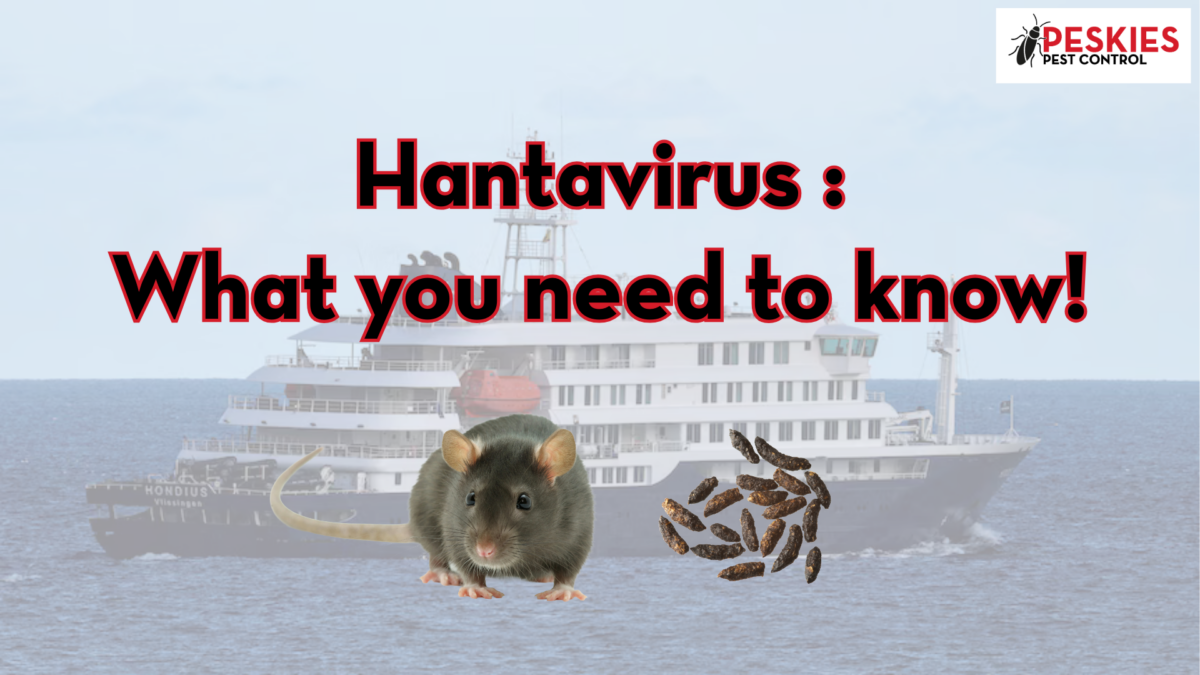
Welcome back to the Peskies Pest Control Podcast, where we look beyond the common household nuisance to discuss the serious health risks associated with local wildlife. In this episode, Travis dives into the recent headlines surrounding the MV Hondius cruise ship outbreak to explore the realities of Hantavirus—a severe respiratory disease with a staggering 40% mortality rate. While the news may be focused on the Atlantic, the danger actually begins on land with the rodents that enter our homes and workplaces. Join us as we discuss how professional exclusion and monitoring are your family’s best defense against these invisible pathogens.
Podcast Transcript:
Host: Hey everyone and welcome back to another episode of the Peskies Pest Control Podcast. So today we don’t necessarily want to discuss the nuisance side of pests, but we want to talk a little bit about the dangerous side of pests. So anyone who has been on social media, watched the news lately, you probably seen headlines referring to the MV Hondius. If you’re not familiar with that, it is a cruise ship that was out in the Atlantic Ocean and is dealing with a now deadly outbreak of what is known as Hantavirus. So three people have died, there’s quite a few more being monitored around the world. CDC says they’re on high alert and it just sounds like something out of a horror movie, right? Or a suspense movie of some sort. You got a Hantavirus outbreak out in the middle of the ocean, but the truth is this is not a cruise ship problem, this is not an ocean problem. This is a rodent problem. Very often it starts on land, even in some of the places where you live and you work.
What is Hantavirus?
Host: So you may ask yourself, what exactly is Hantavirus? In short, it is a severe respiratory disease. So, you know, we have different strains of Hantavirus, but you know, the scary part is is that it has a mortality rate of nearly 40%. So compare that to the flu or even COVID-19 and you realize, you know, how potentially serious this can be. So, you know, you may be wondering how do you get Hantavirus? Well, you don’t get bitten by a mouse or a rat to get sick from this virus. It’s actually a lot easier than that and you don’t even have to contact a live rodent to get it. But the virus is carried by rodents, some mice, some rats, and they usually shed or disperse the virus when they urinate or when they defecate or even from their saliva. So you can get it from urine, their droppings, their spit. And when their droppings dry out and you sweep them up or you vacuum them or you clean them up, especially in large rodent infestations, the virus almost becomes aerosolized, you know, floating around in the air and then you breathe it in and you are at risk for Hantavirus in that moment or at that time.
The MV Hondius Connection
Host: So realistically, you know, how did this happen on a cruise ship? Well, the outbreak, you know, we can speculate all we want to but it likely started before the passengers were even on the boat. You know, there are reports that the first victims may have been exposed while birdwatching or visiting remote areas in Argentina. But two things to note here. The virus has quite a long incubation period, so somewhere in the upwards of 8 weeks. So you might not even really know that you’re sick until way after you’ve already been exposed. And you could see where somebody maybe got on the cruise ship having already been exposed to this virus. And it only takes one small interaction with an infested area, you know, to set this off. So on the ship, because it was a certain specific strain, it began to spread through close contact between the guests on the ship. And this is why we say, you know, that pest control isn’t just about property itself. Yeah, we love protecting your property from insects and from rodents and wildlife, but the big picture of pest control really is about public health.
Bringing it Home – Why Pest Control Matters
Host: So I know what you’re thinking now, it’s like, well, I’m not on a cruise ship in the Atlantic, or I’m not going to get on a cruise ship in the Atlantic. But here’s the unfortunate reality: every time that a rodent, a mouse or a rat enters your crawlspace, your attic, your kitchen pantry, they are bringing what is on the outside and bringing it in. So they’re not just looking for your food, they’re leaving behind a biological footprint that can in the long run affect you, your pets, your children. In Peskies, we don’t just kill bugs. You know, we create barriers between you and your family and your pets and we create the barriers between that group and these types of groups, the insects, the rodents, the wildlife, that sort of thing. So for rodents specifically, exclusion is extremely important and when I say exclusion, I mean sealing off the entry points so that they cannot get in in the first place. And then on top of that, sanitization is extremely important. If you find droppings, it may not be the best idea to sweep them up. It might be a better idea to call a professional who knows how to disinfect, who has the appropriate personal protective equipment or PPE to deal with that type of issue just to protect you and your family from aerosolizing those those types of diseases. And then of course after exclusion and sanitization, monitoring is important. Rodents didn’t advance as long and as far as they have without being experts at hiding. So professional monitoring and inspection finds them before it becomes this massive huge infestation which can then in turn become a massive and huge health risk for you and your family.
Closing & Call to Action
Host: So, you know, from our point of view and definitely the world’s point of view, the news, you know, coming from that cruise ship, the MV Hondius, is definitely a tragedy. But I do think that it is a broader wake-up call. You know, we share our world with different insects, with rodents, with wildlife, but our living spaces we shouldn’t have to share in terms of the air with these pathogens that they, you know, spread. So do not wait until you see a mouse running across your floor because chances are they’ve been there for a lot longer than you have actually realized or then that you have actually seen. If you hadn’t had an inspection, if you don’t have general pest control on a regular basis, give us a call at Peskies Pest Control. Let’s make sure that your home stays a sanctuary for yourself and your family and not a habitat for rodents, wildlife and pests. So stay safe, stay pest-free, and we’ll see you next time here on the Peskies Pest Control Podcast.